


Why is Colombia Famous for Coffee? A Deep Dive into the Country’s Coffee Legacy
Colombia is one of the most iconic coffee-producing countries in the world, widely celebrated for its high-quality Arabica coffee, ideal growing conditions, and rich coffee heritage. Coffee in Colombia is more than just an agricultural product—it is deeply embedded in the nation’s history, economy, and identity.
For over a century, Colombian coffee has been synonymous with excellence, gaining global recognition for its balanced acidity, smooth body, and rich aroma. The country’s equatorial location, diverse microclimates, and high-altitude farms create the perfect environment for growing some of the finest Arabica beans in the world. Additionally, Colombia’s meticulous hand-picking process and dedication to small-scale, specialty coffee farming ensure that each bean meets the highest quality standards.
But what exactly makes Colombian coffee stand out from the rest? Why is it considered one of the best in the world? This comprehensive guide will explore the key factors that contribute to Colombia’s coffee fame, including its unique climate, rich volcanic soil, coffee-growing regions, harvesting process, and cultural significance.
1. Ideal Coffee-Growing Climate: Perfect Conditions for Premium Beans
One of the main reasons why Colombian coffee is so highly regarded is its perfect coffee-growing conditions. The country’s geography and climate provide the optimal environment for cultivating Arabica coffee, which thrives in cool temperatures, high elevations, and consistent rainfall.
Key Climate Factors That Make Colombian Coffee Exceptional
- High Altitude: Colombian coffee is grown at elevations ranging between 1,200 and 2,400 meters above sea level. Coffee grown at higher altitudes matures more slowly, allowing the beans to develop greater complexity, acidity, and flavor depth.
- Stable Temperatures: Due to its proximity to the equator, Colombia has a mild, stable climate year-round, with average temperatures between 17-23°C (63-73°F)—perfect for coffee cultivation.
- Regular Rainfall: Coffee plants require a steady but moderate amount of water to flourish. Colombia benefits from consistent rainfall throughout the year, ensuring that coffee cherries develop at an optimal rate without extreme droughts or excessive wet seasons.
- Rich Volcanic Soil: Many of Colombia’s top coffee-producing regions, especially in the Coffee Triangle, have nutrient-rich volcanic soil, which enhances the minerality and complexity of the coffee beans.
This combination of altitude, temperature, rainfall, and soil composition results in coffee that is aromatic, flavorful, and balanced, with distinct notes of fruits, caramel, and chocolate.

2. The Coffee Triangle: The Heart of Colombia’s Coffee Industry
Colombia’s most famous coffee-growing region is the Coffee Triangle (Eje Cafetero), consisting of the departments of Caldas, Quindío, and Risaralda. This region is globally recognized for producing some of Colombia’s highest-quality coffee, thanks to its perfect mix of elevation, climate, and traditional farming methods.
Why is the Coffee Triangle So Famous?
- Optimal Growing Conditions: The Coffee Triangle provides the perfect combination of high altitude, volcanic soil, and steady rainfall, ensuring that coffee beans develop a rich, complex flavor profile.
- Coffee Research and Innovation: This region is home to Cenicafé (National Coffee Research Center), one of the most advanced coffee research institutions in the world. Here, experts study new cultivation techniques, disease-resistant coffee varieties, and sustainable farming practices to continuously improve Colombia’s coffee industry.
- A Hub for Coffee Tourism: The Coffee Triangle is a major destination for coffee lovers, offering immersive experiences such as coffee farm tours, processing demonstrations, and guided tastings. Popular towns like Salento, Manizales, and Armenia attract thousands of visitors each year.
- UNESCO World Heritage Recognition: Due to its cultural and historical importance, the Coffee Triangle has been designated a UNESCO World Heritage Site, preserving Colombia’s traditional coffee farming landscapes and practices.
The Coffee Triangle is often referred to as the heart of Colombian coffee, and its reputation for producing premium, high-altitude Arabica beans continues to solidify Colombia’s global standing as a coffee powerhouse.

3. Hand-Picked Harvesting: Quality Over Quantity
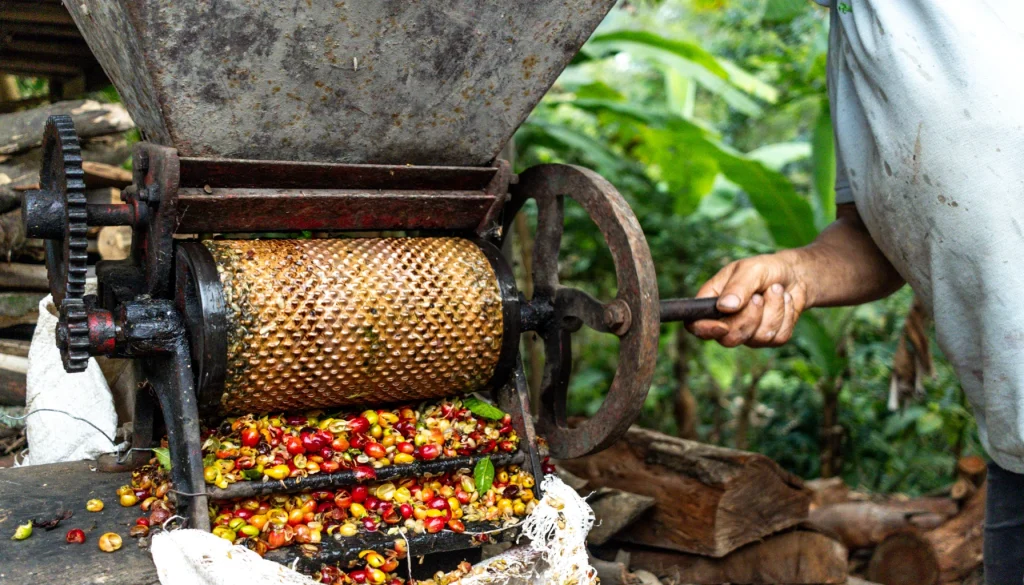
Unlike many mass coffee-producing countries that use machine harvesting, Colombia relies on a hand-picking method to ensure only the ripest coffee cherries are selected. This labor-intensive process plays a crucial role in maintaining the high quality and consistency of Colombian coffee.
The Importance of Hand-Picking Coffee Cherries:
- Selective Harvesting: Skilled coffee pickers only choose fully ripe cherries, avoiding underdeveloped or overripe beans that could affect flavor.
- Higher Cup Quality: Since only the best cherries are used, Colombian coffee tends to have cleaner, more refined flavors with balanced acidity and sweetness.
- Multiple Harvests: Unlike mechanical harvesting, which collects everything at once, hand-picking allows for multiple harvests throughout the season, ensuring that cherries are picked at peak ripeness.
This dedication to manual labor and careful selection is one of the reasons why Colombian coffee is so highly valued in the specialty coffee market.

4. 100% Arabica Coffee: Smooth, Flavorful, and High-Quality
Colombia exclusively produces Arabica coffee, which is widely regarded as the superior coffee variety due to its smooth taste, refined acidity, and complex flavor notes. Arabica beans contain less caffeine but more natural sugars, resulting in a sweeter and more aromatic cup compared to the harsher, more bitter Robusta beans grown in other countries.
Common Flavor Notes Found in Colombian Coffee:
- Fruity Undertones – Citrus, berries, and tropical fruit flavors.
- Sweetness – Caramel, honey, and chocolate-like notes.
- Balanced Acidity – Bright yet smooth acidity, making the coffee crisp and refreshing.
The exclusive focus on 100% Arabica coffee is another reason why Colombian coffee consistently ranks among the best in the world.
5. The Role of the National Federation of Coffee Growers (FNC)
Colombia’s coffee industry is supported by the National Federation of Coffee Growers (FNC), an organization that has played a vital role in:
- Improving Coffee Quality: The FNC provides farmers with training, research, and resources to help them produce better coffee.
- Marketing Colombian Coffee Globally: The FNC introduced Juan Valdez, an internationally recognized brand and mascot that represents Colombian coffee farmers.
- Supporting Small-Scale Farmers: Unlike other coffee-producing countries dominated by large plantations, Colombia’s coffee industry is built on small, family-owned farms, and the FNC helps them compete in global markets.
The FNC’s efforts have ensured that Colombian coffee remains a premium product with strong international demand.
6. Unique Microclimates: Diverse Coffee Profiles Across Regions
Colombia’s diverse geography means that coffee grown in different regions has distinct flavors and characteristics. This variety allows coffee lovers to explore a wide range of unique Colombian coffees, each influenced by the microclimate where it is grown.
Key Coffee Regions and Their Flavor Profiles:
- Antioquia: Medium body, nutty and chocolatey notes, smooth acidity.
- Caldas: Bright acidity, floral and fruity notes, caramel sweetness.
- Quindío: Fruity, balanced acidity, honey-like sweetness.
- Risaralda: Balanced acidity, chocolate and citrus notes, full-bodied.
- Tolima: Medium acidity, tropical fruit notes, caramel undertones.
- Cundinamarca: Crisp acidity, floral and citrus notes, tea-like body.
- Boyacá: Mild acidity, nutty and cocoa notes, smooth body.
This regional diversity ensures that Colombian coffee caters to a wide range of flavor preferences, from bright and acidic to smooth and chocolatey.
Why Colombian Coffee Remains a Global Favorite
Colombia’s coffee reputation is built on a combination of ideal growing conditions, high-altitude farms, careful hand-picking, and a deep-rooted coffee culture. The country’s commitment to producing only 100% Arabica coffee, along with the support of organizations like the National Federation of Coffee Growers, ensures that Colombian coffee remains one of the most sought-after in the world.
Whether you enjoy a bright, fruity, and acidic brew from the Coffee Triangle or a smooth, chocolatey cup from Antioquia or Tolima, Colombian coffee offers a diverse and high-quality experience that continues to captivate coffee lovers worldwide.
For anyone seeking a truly exceptional cup of coffee, Colombia is the gold standard, and its legacy as a coffee powerhouse is well deserved.